- Old or fouled media can allow cloudy water and fine debris to return to the pool.
- Sand, zeolite and glass have different grades, filtration strengths and service lives.
- Premium glass can last longer, so condition should be assessed rather than replaced automatically.
What happens as filter media ages
Years of oils, sunscreen, scale and fine debris can coat the media. Grains can clump together or water can carve channels through the bed, letting water take the easiest path instead of being properly filtered.
Common signs include cloudy water, short filter cycles, higher or unusual pressure, weak return flow, repeated algae and little improvement after a correct backwash. A damaged lateral or incorrect media level can create similar symptoms, so the filter should be inspected before replacement.
Is four to five years a fixed replacement rule?
No. It is a practical check point for many heavily used sand and zeolite beds in tropical conditions, not an expiry date for every filter. Pool load, water balance, backwashing and the chosen media all affect lifespan.
High-quality glass media may perform for longer. The best decision comes from checking flow, pressure, water clarity and the physical condition of the bed.
Which filter media is best?
Glass Pearls are often the strongest premium choice for very fine clarity and lower backwash-water use. Zeolite is useful when ammonia adsorption and chloramine reduction are priorities. Grade 16/30 filter sand remains a proven, economical option.
The filter manufacturer’s specified media type, grade and quantity always comes first. Mixing unsupported grades or using ordinary play or building sand can damage performance.
Sand, zeolite and glass compared
The grain sizes below show why the media must match the filter manufacturer’s specification.
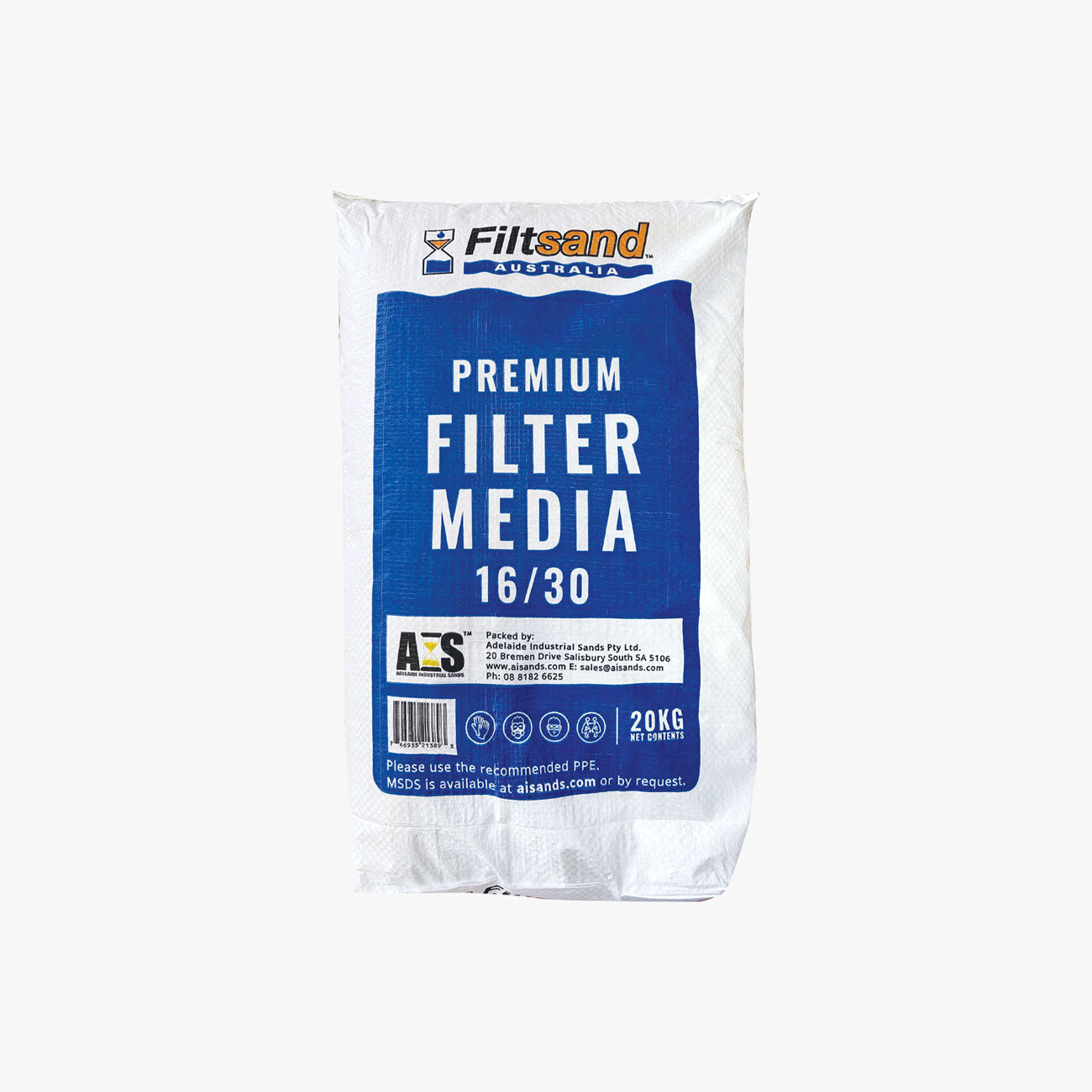
Grade 16/30
Approx. 0.5–1.0 mmBest proven budget optionReliable and widely supported when the correct pool-filter grade is used.
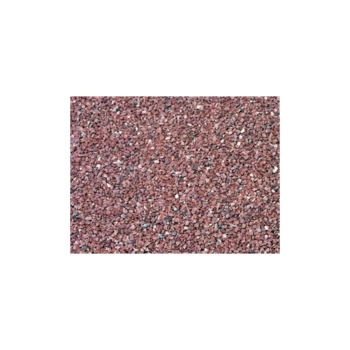
ZeoPlus 1.0–2.2 mm
Garnet layer 0.2–0.6 mmBest for ammonia adsorptionMicroporous mineral media that can improve clarity and help reduce chloramine-forming contaminants.
0.6–0.8 mm
Filters to about 3 micronsBest premium clarity optionChemically inert premium media that can reduce backwash water compared with sand.
Helpful answers
How often should pool filter sand be changed?
Around four to five years is a useful inspection point for a busy pool, but pressure, flow, clarity and the media’s physical condition should determine replacement.
Is glass better than sand in a pool filter?
Premium glass can filter finer and use less backwash water than conventional sand. Sand is still a dependable lower-cost choice when the correct grade is installed and maintained.
Can I put any sand in a pool filter?
No. Use the exact pool-filter media and grade specified by the filter manufacturer. Ordinary sand can be the wrong size and may damage filtration or escape into the pool.
Technical sources
Product specifications and troubleshooting details were checked against these manufacturer and industry resources.